Sustainability Trends in Aircraft Interior Design


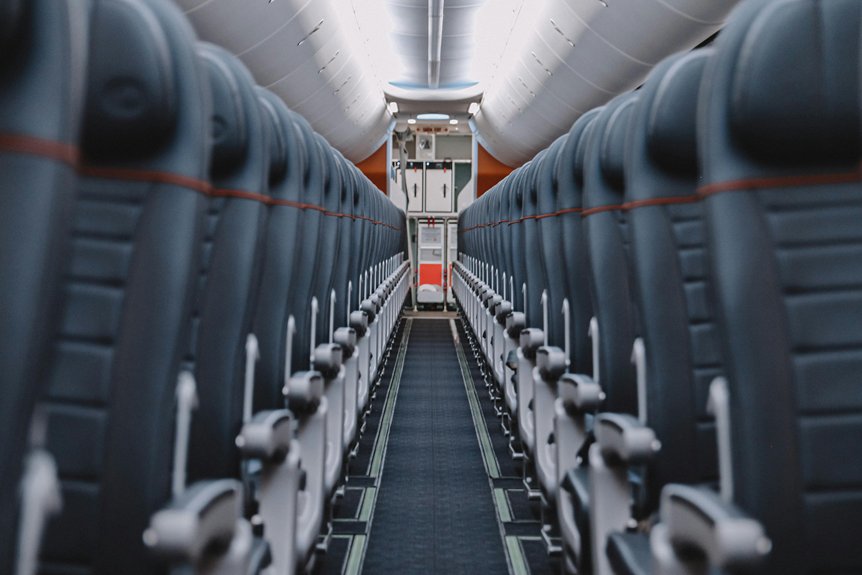
Sustainability in aircraft interior design is transforming how you experience flying by incorporating eco-friendly materials like biodegradable plastics, recycled fabrics, and smart, lightweight components that reduce weight and fuel use. Innovations such as modular seating, space-saving layouts, and smart cabin systems help lower environmental impact while enhancing passenger comfort. Industry leaders are setting standards with renewable sourcing and sustainable manufacturing processes. Keep exploring to learn more about how these green trends are reshaping the future of aviation interiors.
Why Sustainability Is Critical in Aircraft Interior Design
Sustainability has become a vital consideration in aircraft interior design because the aviation industry considerably impacts the environment. To reduce this impact, designers are increasingly turning to biodegradable polymers, which break down naturally and lessen landfill waste. Using these materials helps cut down on non-biodegradable waste generated during manufacturing and disposal.
Additionally, integrating renewable energy sources, like solar panels or biofuels, supports eco-friendly operations and reduces carbon footprints. These strategies are essential because aircraft interiors account for significant resource consumption and waste.
Emphasizing sustainable materials and energy solutions not only benefits the environment but also aligns with growing passenger expectations for greener travel options. Moreover, incorporating advanced lighting solutions like LED cabin lighting can significantly reduce energy consumption and enhance sustainability efforts. Ultimately, prioritizing sustainability helps the industry move towards a more responsible and eco-conscious future.
Eco-Friendly Materials Transforming Cabin Interiors
As airlines and designers seek to reduce environmental impacts, eco-friendly materials are revolutionizing cabin interiors. Biodegradable fabrics are now used for seat covers and cabin textiles, offering a sustainable alternative to traditional materials. These fabrics decompose naturally, minimizing waste and pollution.
Recycled composites are also transforming interior panels and structural elements, repurposing plastic and other waste into durable, lightweight parts. This approach reduces reliance on virgin resources and lowers carbon footprints.
By choosing these innovative materials, you help create a greener, more sustainable flying experience. The shift toward biodegradable fabrics and recycled composites not only supports environmental goals but also appeals to eco-conscious travelers.
As you incorporate these materials, you’re contributing to a more sustainable future for aviation.
Innovations in Sustainable Manufacturing Technologies
Innovations in manufacturing technologies are driving noteworthy advancements in creating eco-friendly aircraft interiors. Biomimicry innovations, inspired by nature, enable you to develop materials and processes that mimic natural efficiencies, reducing resource use and energy consumption.
These innovations help you produce lightweight components that lower fuel emissions and improve overall sustainability. Waste reduction is another key focus; new manufacturing methods minimize scrap and optimize material use, cutting down on landfill waste.
Additive manufacturing, or 3D printing, allows you to create complex parts with minimal waste, streamlining production. By adopting these technologies, you can significantly cut environmental impacts while maintaining high-quality standards.
Embracing biomimicry and waste reduction techniques positions you at the forefront of sustainable aircraft interior manufacturing.
How Cabin Space Optimization Reduces Environmental Impact
Optimizing cabin space directly reduces an aircraft’s environmental footprint by allowing more efficient use of onboard resources. Modular seating systems enable you to reconfigure layouts quickly, maximizing capacity without adding extra aircraft trips. This flexibility reduces fuel consumption and emissions per passenger.
Incorporating smart storage solutions minimizes clutter and frees up space, making cabins lighter and more efficient. When you use space-smart designs, you lower the need for additional materials and reduce waste.
Efficiently packed cabins also mean fewer flights are required to meet travel demand, further decreasing overall environmental impact. By focusing on space optimization, you contribute to more sustainable aviation practices, cutting emissions, conserving fuel, and lowering the aircraft’s carbon footprint.
Designing Comfortable and Eco-Conscious Passenger Spaces
Creating comfortable and eco-conscious passenger spaces involves thoughtfully selecting materials and design features that enhance well-being while minimizing environmental impact. To achieve this, focus on integrating luxury aesthetics with sustainable choices, such as recycled or biodegradable materials that don’t compromise style.
Prioritize passenger privacy by incorporating design elements like privacy screens or semi-enclosed seating areas, which also contribute to a sense of personal space and comfort. Use ergonomic furniture and soft lighting to boost relaxation, all while choosing eco-friendly fabrics and finishes.
This approach guarantees passengers feel pampered without harming the environment. Balancing elegance with sustainability creates a premium experience that aligns with modern eco-conscious values and meets travelers’ comfort expectations.
How Airlines Are Adopting Green Interior Trends
As airlines seek to meet growing environmental expectations, they’re increasingly incorporating green interior trends into their aircraft designs. You’ll notice this in eco-friendly in-flight amenities, such as biodegradable mealware and sustainable textiles, which reduce waste.
Cabin lighting also plays a role, with many airlines adopting LED systems that consume less energy and offer customizable, mood-enhancing options. These lighting systems not only enhance passenger comfort but also lower power usage, contributing to overall sustainability.
Airlines are choosing materials that are recyclable or made from renewable resources, ensuring their interiors are eco-conscious from start to finish. By focusing on these elements, airlines demonstrate their commitment to reducing environmental impact while providing modern, comfortable travel experiences.
Challenges Facing Sustainable Aircraft Interior Solutions
Implementing sustainable solutions in aircraft interiors faces several significant challenges, primarily due to the need to balance environmental benefits with safety, durability, and cost.
Recycling challenges often hinder widespread adoption, as many interior components are difficult to recycle or require specialized processes.
Material sourcing presents another hurdle; finding eco-friendly materials that meet strict safety standards and perform well over time can be complex.
Additionally, sustainable materials are sometimes more expensive or harder to source consistently, increasing overall costs.
You must also consider supply chain limitations and regulatory requirements that can slow down innovation.
Overcoming these obstacles requires careful planning, collaboration with suppliers, and ongoing research to develop solutions that are both environmentally responsible and practical for airline operations.
Future Technologies for Eco-Friendly Cabin Environments
Emerging technologies are poised to revolutionize eco-friendly cabin environments by enhancing sustainability and passenger comfort simultaneously. Smart cabins use advanced sensors and automation to optimize energy use, reducing waste and emissions. These systems adjust lighting, temperature, and airflow in real-time, ensuring efficiency without sacrificing comfort.
Renewable energy sources, such as solar panels integrated into aircraft structures, are becoming more viable, providing clean power for cabin systems. Future innovations include smart materials that adapt to environmental conditions and reduce reliance on traditional resources.
These technologies work together to create more sustainable interiors, lowering the carbon footprint of flights. By embracing smart cabins and renewable energy, airlines can lead the way toward greener skies while maintaining a high-quality passenger experience.
Case Studies of Airlines Leading in Sustainability
Several airlines are setting the standard for sustainability by adopting innovative practices and cutting-edge technologies. They’re leading the way by using biodegradable plastics for cabin components, which reduce plastic waste and environmental impact.
These airlines prioritize renewable sourcing, ensuring materials like fabrics and plastics are derived from sustainable resources, lowering their carbon footprint. For example, some carriers have replaced traditional plastics with biodegradable alternatives in tray tables and seat covers.
Others invest in sourcing materials from renewable resources, supporting circular economy principles. These initiatives demonstrate a strong commitment to eco-friendly practices, inspiring industry-wide change.
Tips for Choosing Sustainable Aircraft Interior Solutions
Choosing the right sustainable aircraft interior solutions requires careful consideration of materials, design practices, and long-term environmental impact.
Start by selecting biodegradable furnishings that break down safely at end-of-life, reducing waste. Look for recycled fabric upholstery, which uses fewer resources and minimizes landfill contributions.
Prioritize materials with eco-certifications, ensuring they meet sustainability standards. Avoid volatile organic compounds (VOCs) to improve air quality onboard.
Incorporate modular designs that allow easy updates and reuse, extending the lifespan of interior components.
Additionally, work with suppliers committed to sustainability, transparency, and responsible sourcing.
Conclusion
Embracing sustainability in aircraft interior design not only benefits the environment but also enhances passenger experience. By choosing eco-friendly materials, innovative manufacturing, and optimized cabin spaces, you can contribute to a greener future. Stay informed about emerging technologies and successful airline initiatives to make smarter, more sustainable choices. To learn more, contact DPI Labs by visiting us online at DPI Labs. Together, you and the industry can drive positive change, making air travel more eco-conscious without compromising comfort or quality.