Interior and Exterior Aircraft Restoration: What to Expect
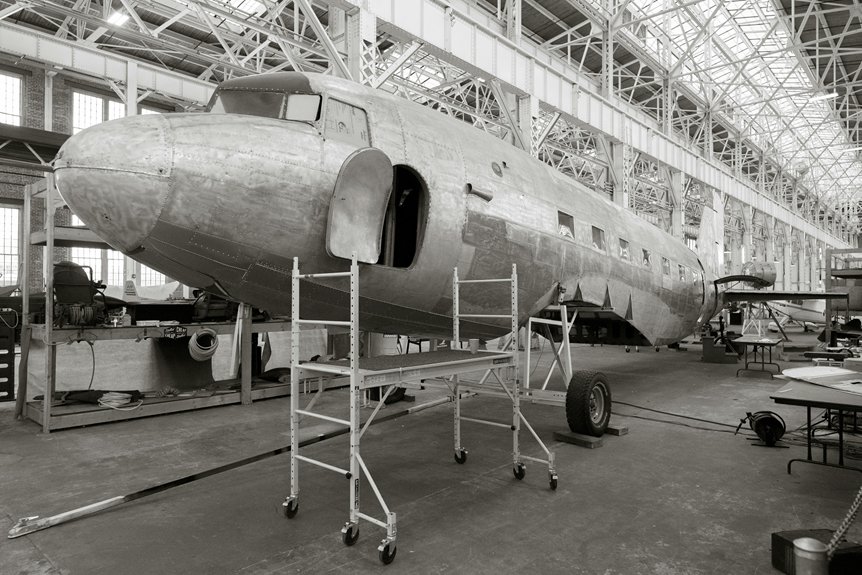
When restoring your aircraft, you can expect a detailed process that includes exterior repainting, corrosion removal, structural repairs, and interior refurbishments like updating upholstery and avionics. Costs vary markedly depending on the scope, often running from tens of thousands to over a hundred thousand dollars, with timelines lasting several months to a year. Proper planning and expert guidance help keep the project on track, and if you look further, you’ll find even more valuable insights.
What’s Included in Aircraft Interior and Exterior Restoration Projects
When undertaking aircraft restoration, it’s vital to understand what’s typically included in both interior and exterior projects.
For the exterior, restoration involves repainting, corrosion removal, and structural repairs to guarantee the aircraft looks good and maintains aviation safety standards. The exterior work not only enhances appearance but also preserves structural integrity.
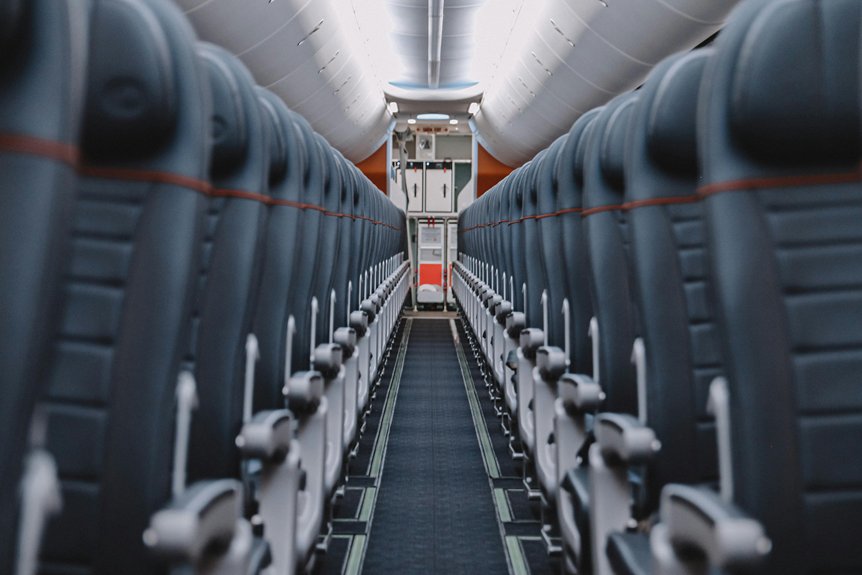
The interior focuses on refurbishing cabins, replacing upholstery, upgrading cabinetry, and installing modern avionics. These updates often align with maintenance schedules to guarantee ongoing safety and compliance.
Both projects require meticulous attention to detail, guaranteeing that every component meets safety regulations. Additionally, implementing advanced cabin management systems can improve operational efficiency and passenger comfort. By addressing these areas, you help extend the aircraft’s lifespan and maintain its value, all while prioritizing aviation safety at every step.
How Long and How Much Does Restoring Your Aircraft Cost?
Restoring your aircraft involves significant investment, both regarding time and money. To manage this, you’ll need accurate cost estimation and clear timeline planning from the start.
The total cost varies depending on the extent of restoration, parts needed, and labor hours, but you should expect to spend tens of thousands to hundreds of thousands of dollars. A thorough assessment helps determine the scope and budget.
Timeline planning is equally important, as restorations can take several months to over a year. Delays may occur due to parts availability or unforeseen issues.
Being realistic about costs and schedule ensures you stay aligned with your goals and avoid surprises. Proper planning allows you to enjoy a restored aircraft that meets your expectations without breaking the bank.
The Essential Steps to Refurbish and Upgrade Your Aircraft’s Interior
Refurbishing and upgrading your aircraft’s interior involves a series of carefully planned steps to guarantee both functionality and aesthetics are enhanced. First, you assess your current interior and define your goals, guaranteeing compliance with aviation safety standards.
Next, you select materials and finishes that align with the latest interior design trends, prioritizing durability and weight efficiency. Then, a professional team removes outdated elements, inspecting for any structural issues. They replace or upgrade seats, panels, and lighting, all while maintaining safety regulations.
Finally, the new interior is installed, tested, and cleaned to ensure everything functions flawlessly. Throughout the process, safety remains a top priority, and modern design trends help create a comfortable, stylish environment that adds value and appeal to your aircraft.
Managing Exterior Painting and Structural Repairs: A Step-by-Step Guide
Managing exterior painting and structural repairs begins with a thorough assessment of your aircraft’s current condition. You’ll identify areas needing paint preparation, such as removing old paint, rust, or corrosion, to guarantee a smooth surface.
Structural reinforcement may be necessary if inspections reveal weakened or damaged areas; this involves strengthening or replacing compromised components to maintain safety and integrity.
Once the assessment is complete, you’ll proceed with cleaning and priming the surface, applying the new paint in layers for durability.
For structural repairs, you’ll carefully reinforce or replace parts, ensuring they meet safety standards.
Throughout this process, attention to detail ensures a high-quality finish and long-lasting results, restoring both the appearance and structural soundness of your aircraft.
Planning Your Aircraft Restoration: Tips to Keep Your Project on Track
To keep your aircraft restoration project on track, thorough planning is essential from the start. Begin by establishing a detailed maintenance scheduling timeline that aligns with your restoration goals. This helps you prioritize tasks and manage resources effectively.
Be aware of certification requirements early on, as compliance impacts your project’s scope and timeline. Consult with FAA regulations or relevant authorities to ensure all work meets safety standards.
Regularly review progress against your plan, adjusting for unforeseen issues. Clear communication with your restoration team minimizes delays and keeps everyone aligned.
Conclusion
Restoring your aircraft is a detailed process that requires careful planning and expert execution. From interior upgrades to exterior repairs, understanding what to expect helps you stay prepared and confident throughout the project. Keep clear communication with your restoration team and set realistic timelines and budgets. With patience and attention to detail, you’ll enjoy a beautifully restored aircraft that meets your expectations and enhances your flying experience. Trust the process, and your aircraft will be ready to soar once again. To learn more, contact DPI Labs by visiting us online at DPI Labs.