Cabin Technology Integration for Modern Aircraft Interiors
Cabin technology integration in modern aircraft enhances your flying experience by combining digital systems like high-definition displays, personalized entertainment, and responsive lighting. You can connect your devices seamlessly, charge wirelessly, and control seat functions easily through intuitive touchscreens. These advanced features improve comfort, safety, and efficiency while keeping you engaged throughout your journey. If you want to discover how airlines are transforming cabins with smart innovations, you’ll find plenty of insights ahead.
Why Cabin Technology Is Critical for Modern Aircraft
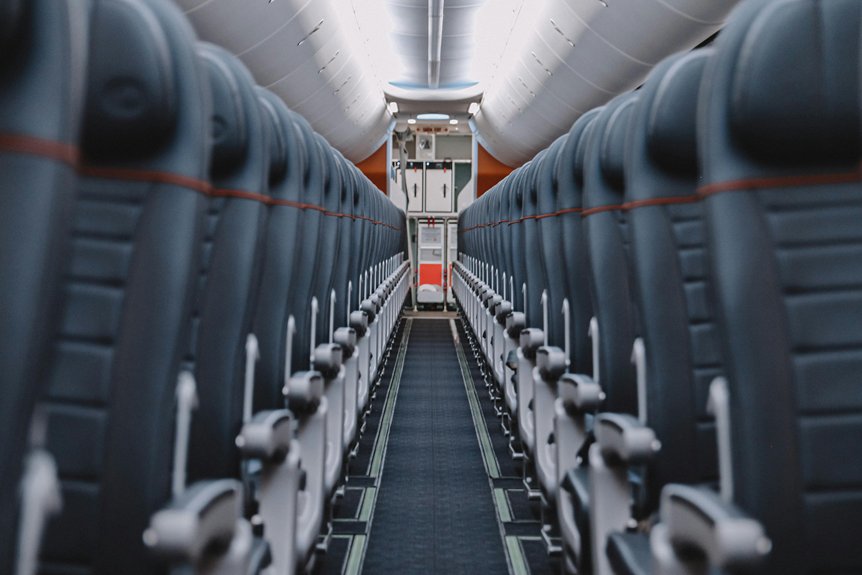
In today’s competitive aviation industry, cabin technology plays a vital role in enhancing passenger experience and operational efficiency. Better in-flight entertainment options keep travelers engaged, making long flights feel shorter and more comfortable. SmartCanvas Display Monitors provide vivid, high-definition visuals that significantly improve the in-flight entertainment experience. Modern cabin lighting systems also improve the ambiance, allowing airlines to adjust brightness and color to suit different phases of the flight, which can reduce passenger fatigue. Advanced cabin technology streamlines operations by providing real-time monitoring of systems, enhancing safety and maintenance. When you combine innovative in-flight entertainment with dynamic lighting, you create a more personalized, relaxing environment. This not only boosts passenger satisfaction but also sets airlines apart in a crowded market. Ultimately, cabin technology is essential for delivering a seamless, modern flying experience.
What Are the Core Digital Systems in Aircraft Cabins?
Aircraft cabins rely on several core digital systems that work together to enhance passenger comfort, safety, and operational efficiency. One key system is in-flight entertainment, which provides passengers with movies, music, and connectivity options to improve their travel experience.
Cabin lighting is another essential digital system that adjusts lighting levels to create a comfortable environment, aid sleep, or reduce jet lag. These systems are integrated into the aircraft’s overall digital architecture, allowing for centralized control and customization.
Additionally, digital passenger service systems streamline communication, seat adjustments, and information displays. Together, these core digital systems ensure a seamless, comfortable journey while supporting airline operations.
Their integration reflects advancements in technology that make modern aircraft interiors more efficient, responsive, and passenger-focused.
How Do Touchscreens and Personal Devices Enhance Passenger Comfort?
Touchscreens and personal devices have become central to enhancing passenger comfort by offering personalized control and entertainment options. Interactive displays allow you to easily select movies, adjust lighting, or change seat settings with a simple tap, making your experience more tailored.
Personal device integration enables seamless connection to in-flight entertainment systems, so you can use your own smartphone or tablet to browse content or control the cabin environment. This setup reduces the need for bulky remote controls and provides a familiar interface, increasing convenience.
By integrating these technologies, airlines create a more engaging and comfortable environment. You gain quick access to entertainment, information, and cabin controls, making your flight more enjoyable and less stressful.
This integration transforms passive travel into a more interactive and personalized journey.
How Do Wireless Charging and Power Solutions Work Inside Aircraft?
Have you ever wondered how your devices stay powered during a flight? Wireless charging and power solutions inside aircraft use advanced technology to keep your gadgets ready.
Wireless charging works through electromagnetic fields that transfer energy from a charging pad or surface to your device without cables. In aircraft, this is integrated into seats or tables, allowing you to simply place your device nearby to charge.
Power solutions include multiple USB ports, AC outlets, and dedicated charging stations, ensuring passengers can recharge their devices anytime. These systems are designed to be efficient, safe, and reliable, even at high altitudes.
How Does IoT Improve Cabin Safety and Passenger Comfort?
Wireless charging and power solutions are just one part of the evolving in-flight experience; increasingly, the Internet of Things (IoT) is transforming how safety and comfort are managed onboard.
IoT enables smart seat controls, allowing you to adjust your seat effortlessly and personalize your comfort. Sensors monitor your preferences and automatically optimize the seating environment.
Ambient lighting, controlled through IoT systems, creates a soothing atmosphere, reducing fatigue and enhancing relaxation. These connected systems also improve safety by detecting issues early, such as seat malfunctions or cabin air quality concerns.
What Are the Main Challenges in Implementing Cabin Technology?
Implementing cabin technology presents several significant challenges, primarily related to ensuring reliability and security. Regulatory hurdles often slow down deployment, as strict standards require extensive testing and certification processes that can delay progress.
Integration complexities also pose a major obstacle; combining new systems with existing aircraft infrastructure demands careful planning and precise execution. You must navigate compatibility issues, data management, and potential disruptions to operations.
Additionally, maintaining cybersecurity is vital to prevent breaches that could compromise passenger safety or airline reputation. Balancing innovation with compliance, while avoiding system failures, requires meticulous coordination among manufacturers, regulators, and airline operators.
Overcoming these challenges is essential to successfully modernize aircraft interiors and deliver enhanced passenger experiences.
What Are the Emerging Trends in Aircraft Interior Technology?
As airlines and manufacturers navigate the complexities of integrating new cabin technologies, emerging trends are shaping the future of aircraft interiors. One key trend is the use of smart materials, which adapt to environmental conditions to enhance passenger comfort and cabin efficiency. These materials can change insulation properties or adjust transparency, creating dynamic spaces.
Augmented reality (AR) is also gaining traction, offering immersive experiences for passengers and simplifying crew operations. AR can provide real-time information, interactive entertainment, or virtual wayfinding, transforming how travelers engage with their surroundings.
These innovations aim to improve the passenger experience while streamlining maintenance and operation processes. Staying ahead with these emerging trends helps you create more personalized, flexible, and tech-savvy aircraft interiors for the future.
How Do Costs and Maintenance Affect Cabin Tech Upgrades?
While the benefits of cabin technology upgrades are clear, their costs and ongoing maintenance can substantially influence your decision to adopt new systems. Conducting a thorough cost analysis helps you understand the initial investment and long-term expenses involved.
Upgrading tech often requires significant capital, and hidden costs can arise from integration or compatibility issues. Maintenance challenges also play a critical role; complex systems may demand specialized skills, frequent updates, or replacement parts, increasing operational costs.
If maintenance becomes too burdensome or expensive, it might offset the benefits of the upgrade. *Consequently*, balancing the initial investment with ongoing costs and ensuring manageable maintenance is essential to making smart, sustainable decisions about cabin technology enhancements.
What Strategies Help Airlines Successfully Implement Cabin Technology?
Successful implementation of cabin technology requires strategic planning and effective coordination. First, you should prioritize passenger experience by selecting reliable in-flight entertainment systems and flexible cabin lighting solutions.
Collaborate closely with manufacturers and suppliers to guarantee seamless integration with existing aircraft systems. Conduct thorough testing to identify potential issues early, minimizing delays.
Train your crew extensively so they can troubleshoot and assist passengers efficiently. Maintain clear communication across teams to keep everyone aligned on goals and timelines.
Investing in scalable, modular systems allows for future upgrades with minimal disruption. By adopting these strategies, you ensure smooth deployment, maximize passenger satisfaction, and future-proof your cabin technology investments.
Ultimately, careful planning and teamwork are key to successful cabin tech integration.
Final Thoughts: The Future of Cabin Technology in Air Travel
The future of cabin technology in air travel promises to transform your flying experience through innovative solutions that enhance comfort, convenience, and connectivity. Virtual reality will likely become a standard feature, offering immersive entertainment or virtual tours during flights.
Biometric security will streamline check-ins and boarding, making the process faster and more secure. Expect to see more personalized experiences, with cabins adapting to your preferences in real-time.
As technology evolves, airlines will focus on seamless integration, ensuring safety while boosting efficiency. These advancements will create a more relaxed, engaging journey from departure to arrival.
Ultimately, the future of cabin tech aims to make air travel smoother, safer, and more enjoyable, aligning with your desire for a modern, connected flying experience.
Conclusion
As you look ahead, cabin technology will continue to transform your flying experience, offering smarter, more personalized, and seamless journeys through advanced digital systems, IoT innovations, and intuitive touch interfaces. Airlines will strive to balance cutting-edge upgrades with cost efficiency, enhancing safety and comfort. Embracing these innovations means enjoying a more connected, convenient, and enjoyable travel experience—setting the stage for the future of air travel to be truly remarkable. To learn more, contact DPI Labs by visiting us online at DPI Labs.